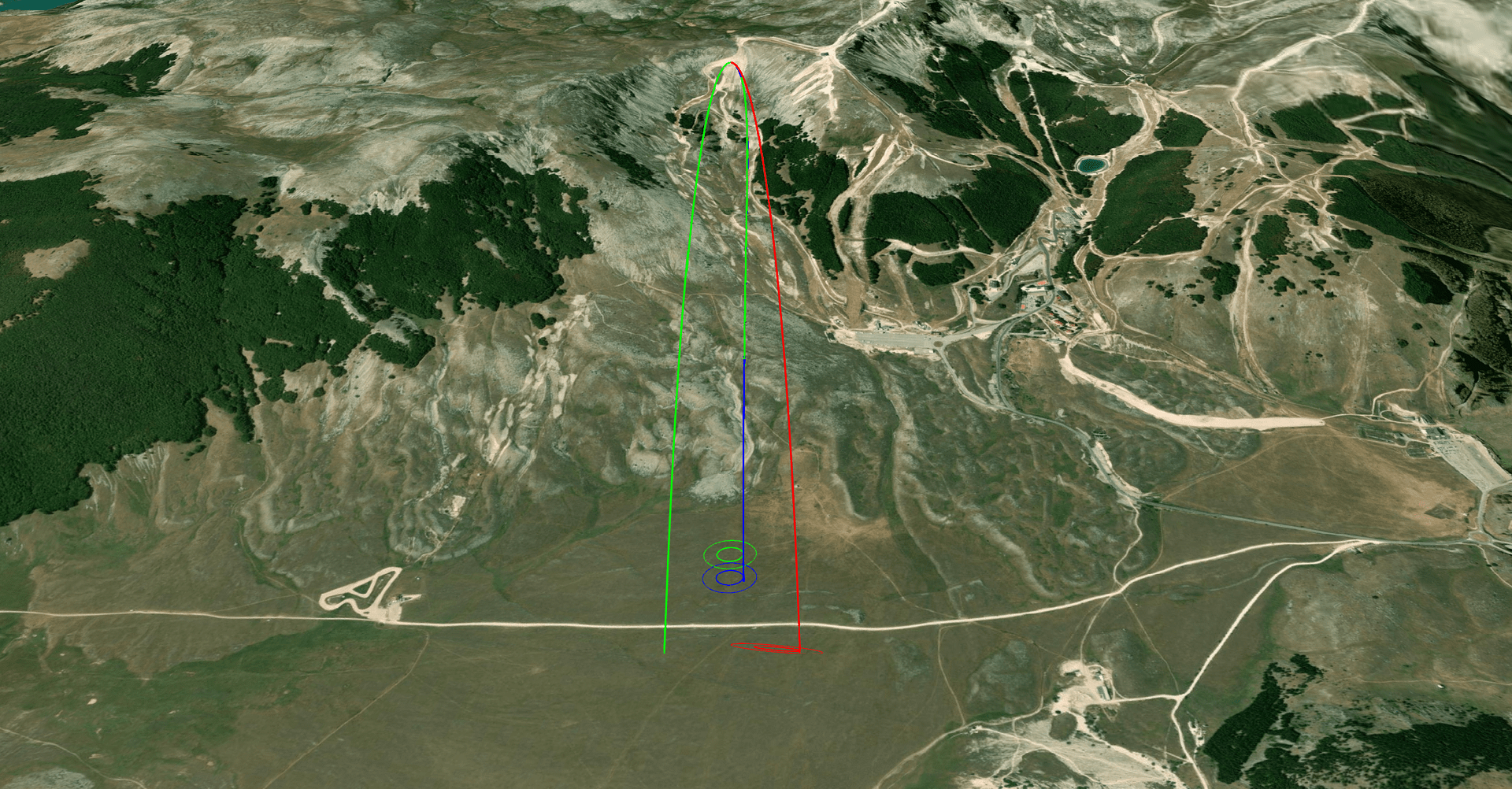
The Mission Analysis department is responsible for developing scripts and software capable of accurately simulating the rocket’s possible trajectories, accounting for all external and internal perturbations affecting the sounding rocket during flight. Perturbations such as: wind, over- or under-estimated motor performance, differences in the launch rail angle, or inaccuracies in the predictions of the models used.
Topics
TRAJECTORY PREDICTION
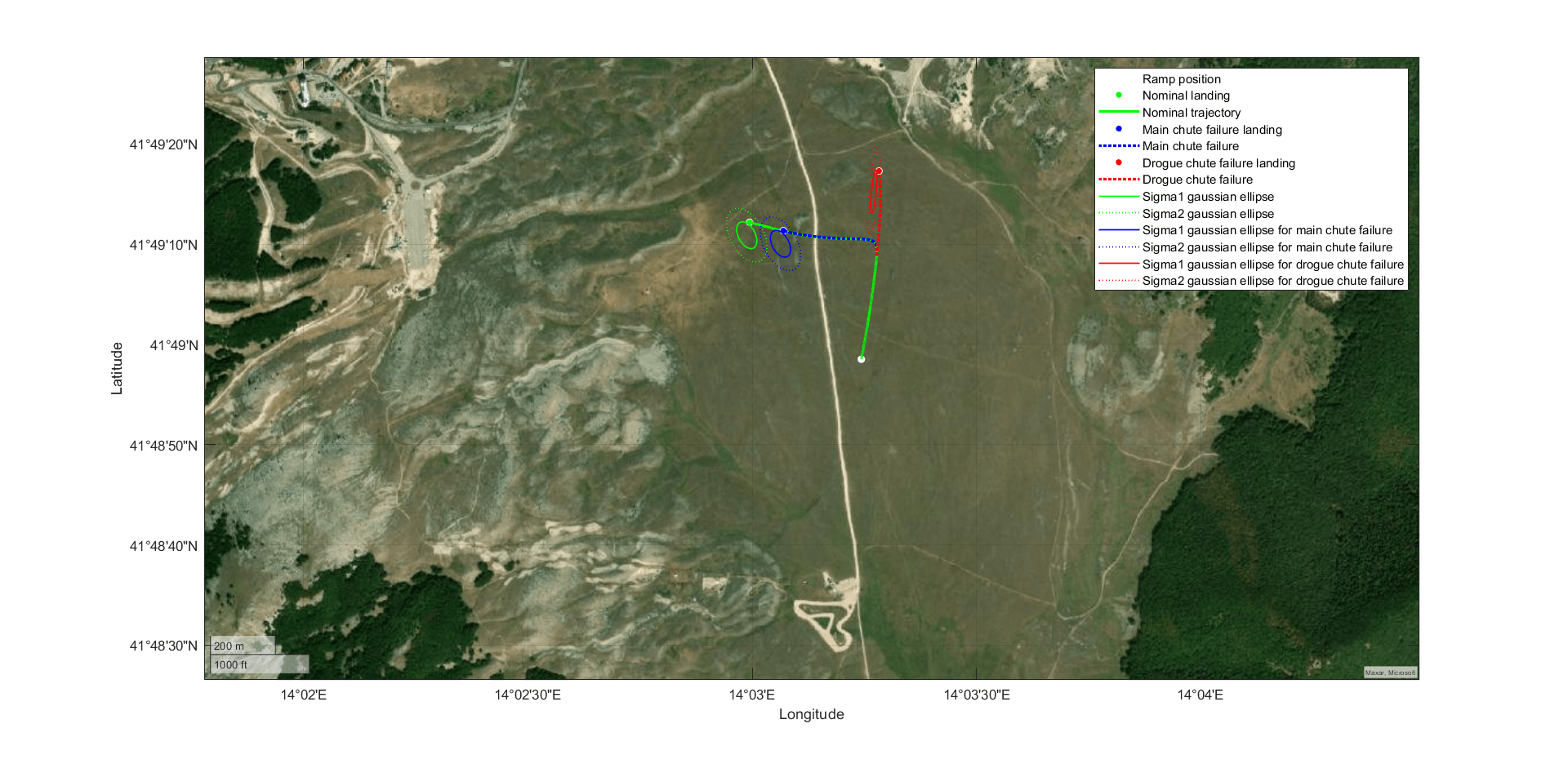
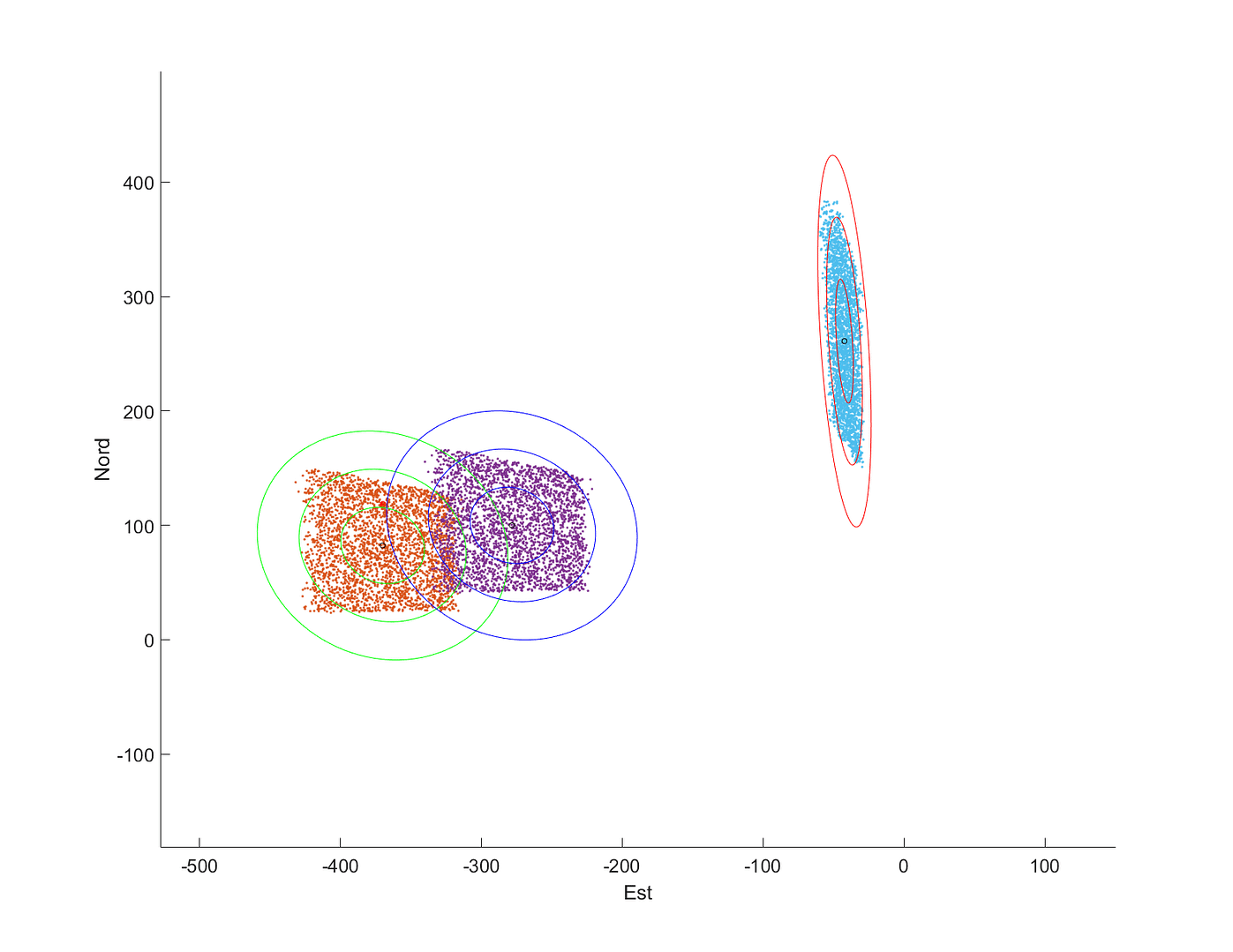
The simulation enables an analysis of the design’s performance and its ability to meet the mission objectives, taking into account critical aspects such as dynamic stability. This translates into ensuring that the vehicle responds correctly to wind-induced perturbations, handles potential in-flight malfunction conditions, and provides accurate predictions of the landing zone and the at-risk area.
PRIOR SAFETY ANALYSIS
The department is also responsible for drafting a mission report documenting the events during flight, the predictions provided by the simulator, and the risks associated with possible malfunctions, carefully taking into account the landing zones and potentially at-risk areas.
POST FLIGHT ANALYSIS
After the flight, the department carries out the Post Flight Analysis, comparing the predictions from our simulations with the data recorded by the onboard avionics. Analyzing this data to identify any anomalies is essential for future improvements to the model and the computational code.
WANT TO JOIN? THIS IS WHAT WE ARE LOOKING FOR:
REQUIRED SKILLS:
Proficiency in using MATLAB and Simulink.
Knowledge of the main aerodynamic effects a rocket is subject to during atmospheric flight.
Present at the interview any Simulink project completed individually.
Basic knowledge of writing in LaTeX
AVANCED SKILLS:
Good knowledge of the numerical algorithms used to integrate differential equations.
Good knowledge of aerodynamic damping effects and aerodynamic stability.
Good knowledge of the main propulsion systems of a rocket.
Knowledge of Python, especially the RocketPy library