The Aerodynamics Department is responsible for modeling the aerodynamic forces and the interaction of our rockets with the environment during launch. Through rigorous theoretical analysis, advanced computational fluid dynamics (CFD) simulations, and wind tunnel testing, we meticulously optimize the aerodynamic design to improve its efficiency and stability. Using state-of-the-art numerical simulation software and MATLAB codes developed entirely in-house by our Department, we are able to rigorously validate our sounding rocket designs, ensuring optimal performance by carefully comparing theoretical models with real launch data. The Aerodynamics Department represents one of the Team’s fundamental pillars, fostering close collaboration with all other departments, including Mission Analysis, Structures, and Recovery.
Topics
CFD SIMULATIONS
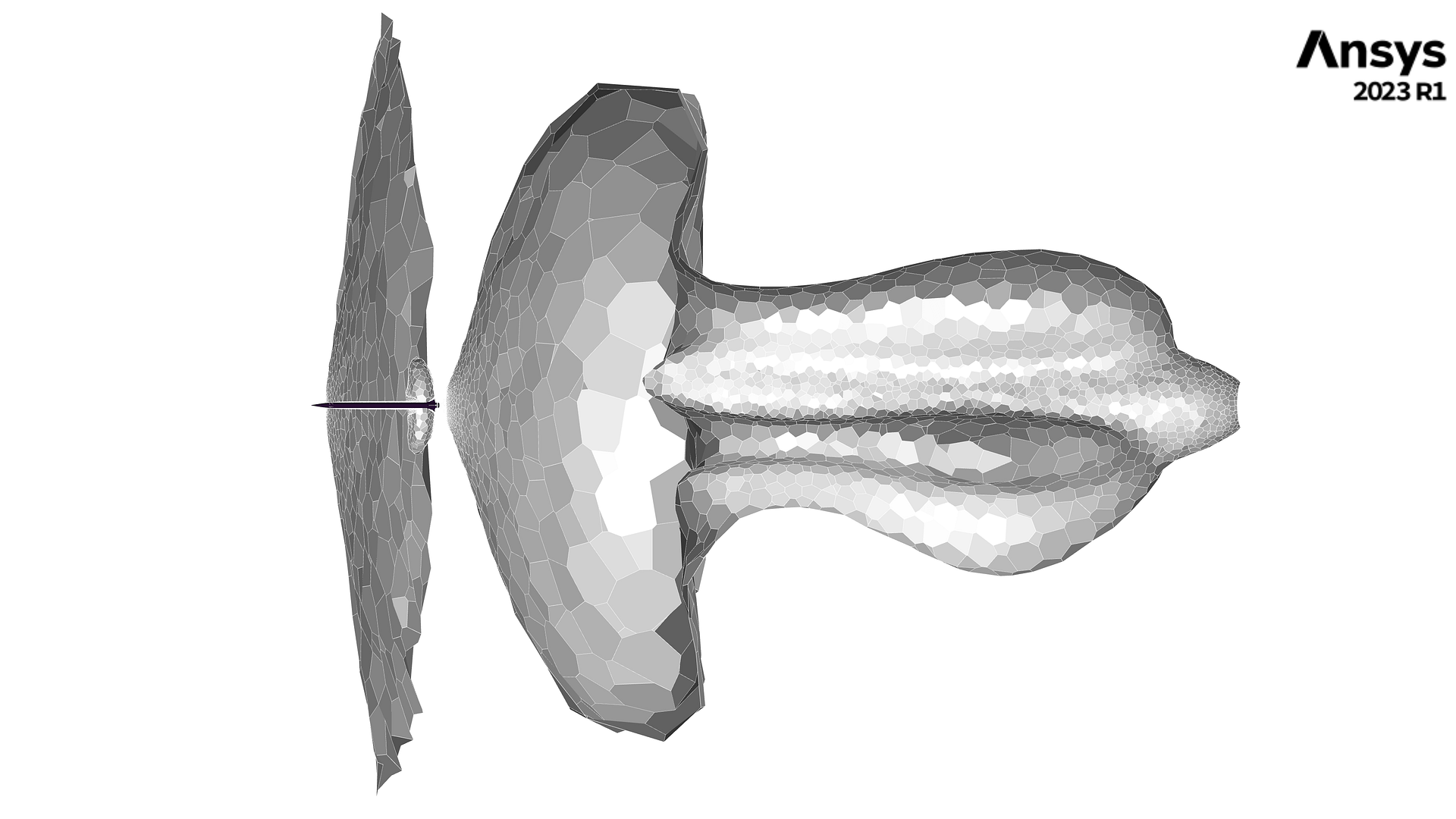
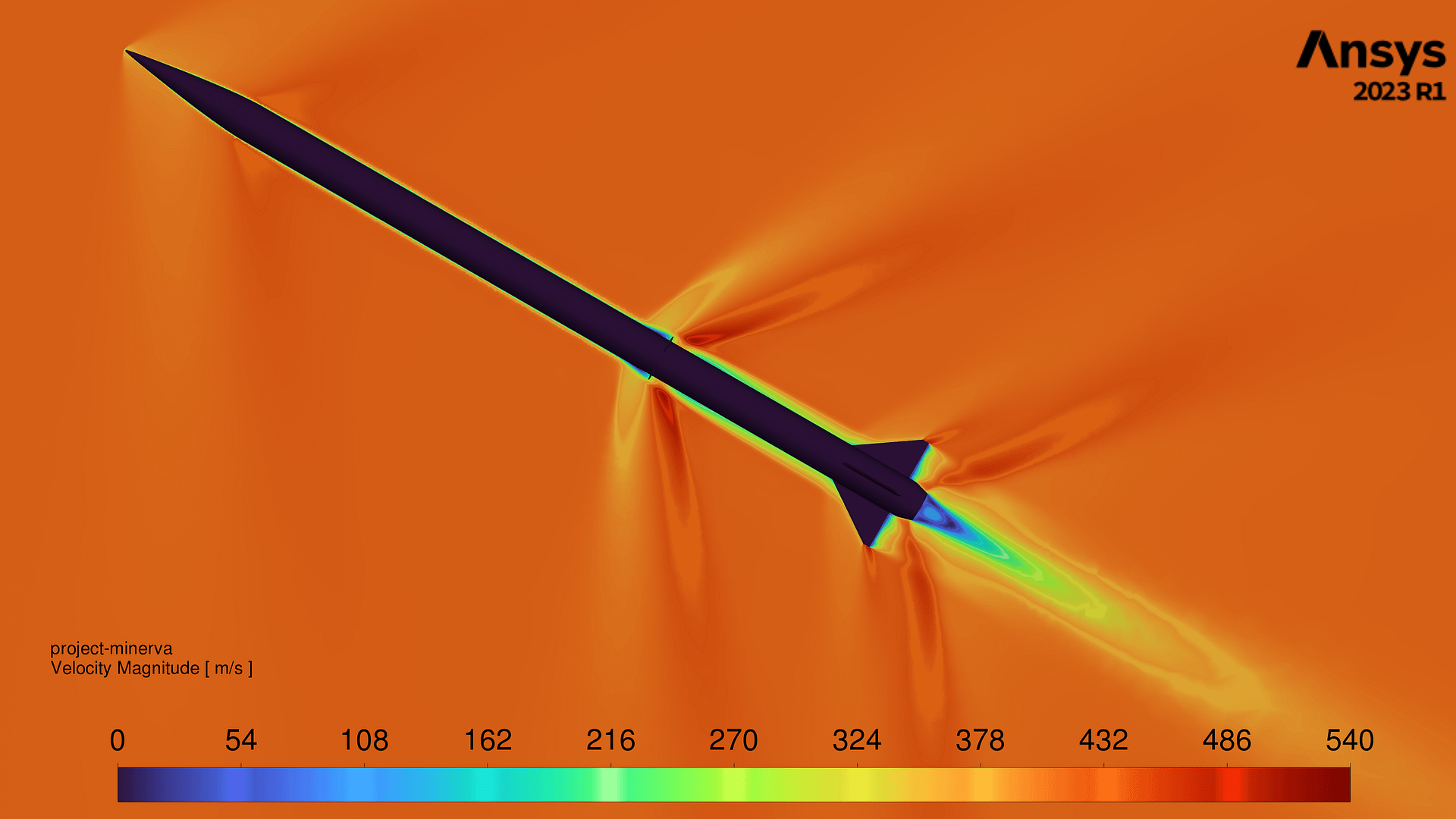
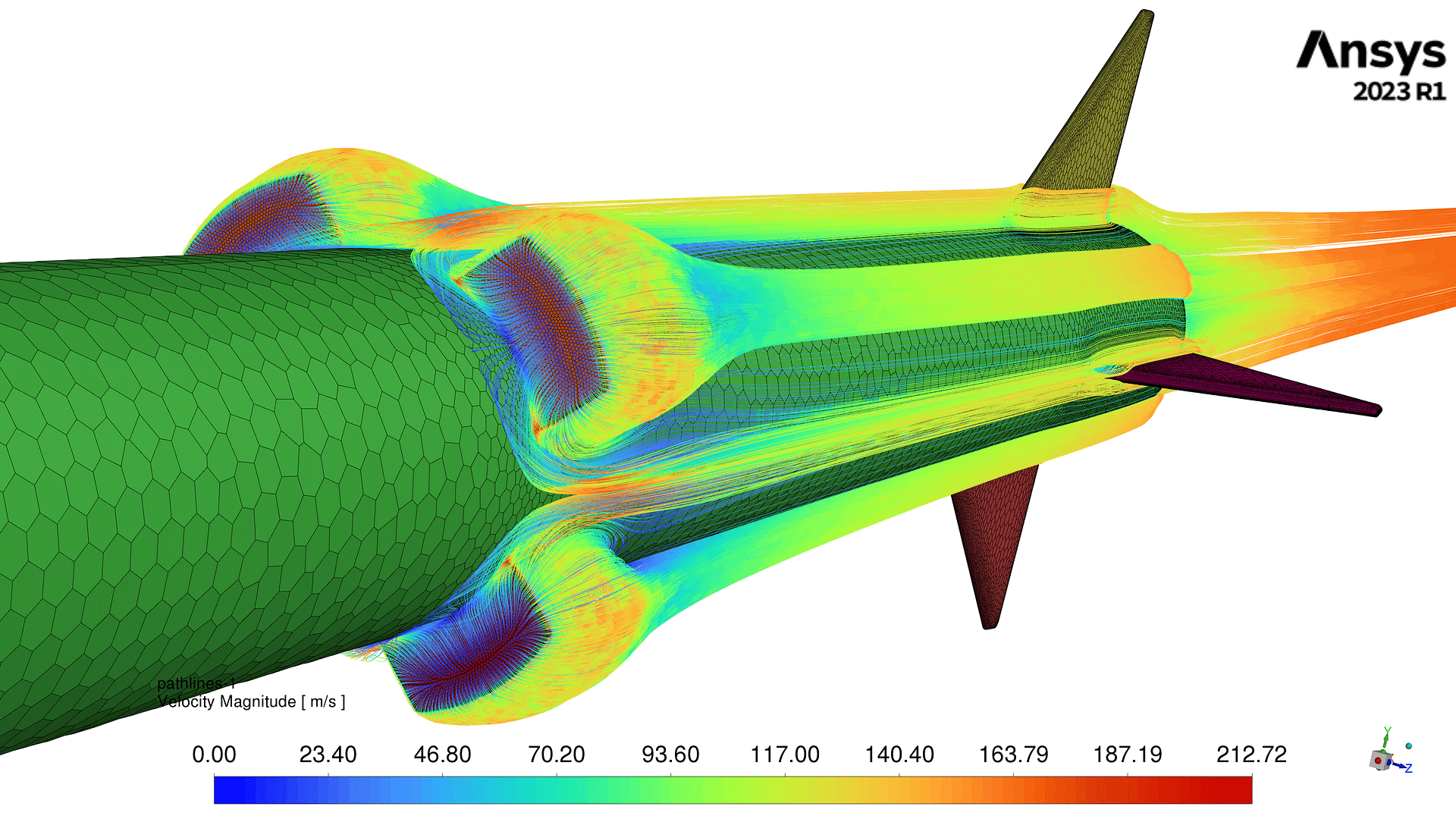
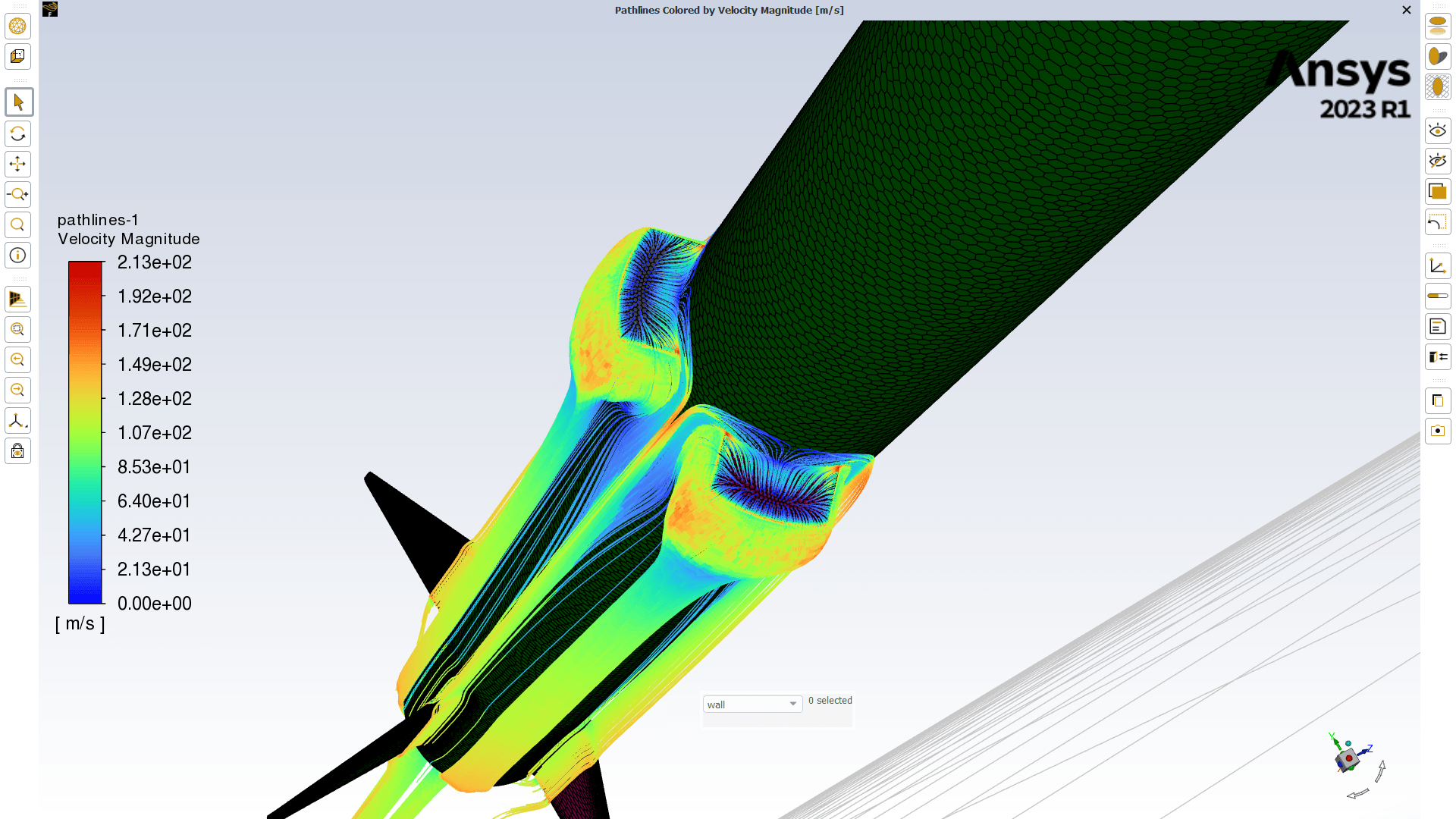
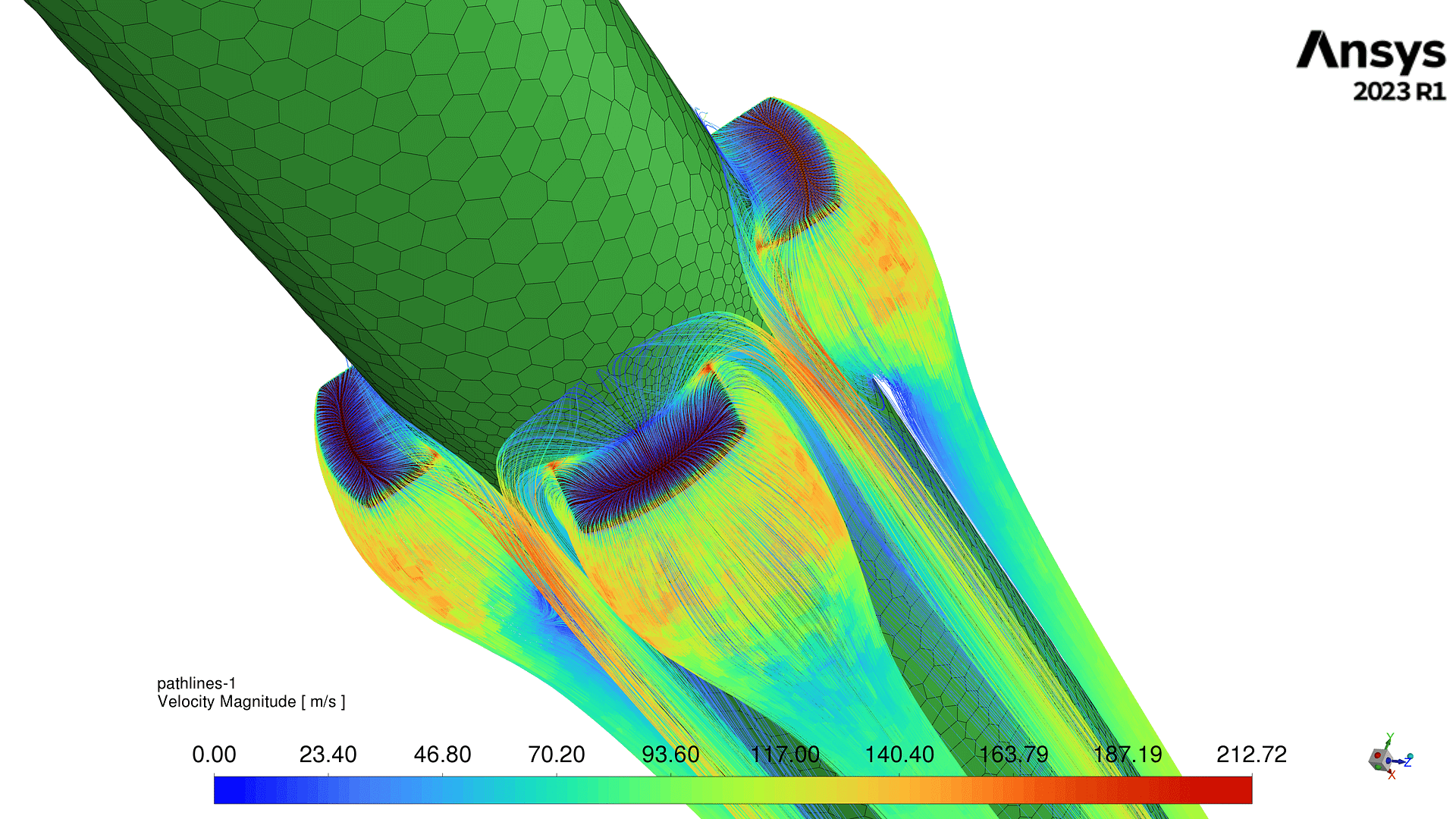
Computational fluid dynamics (CFD) plays an essential role in the design and analysis of our rockets. Our Department handles the development of numerical simulations based on several key phases:
Geometry Definition: we create a digital model of the rocket and its components.
Mesh Generation: we divide the geometry into small elements to solve the equations governing fluid flow.
Solver Setup: we select appropriate mathematical models and algorithms to simulate fluid flow, combustion, and heat transfer within the rocket.
Post-processing: we analyze the simulation results to interpret fluid behavior, temperature distribution, pressure variations, and more.
CFD analyses are essential for optimizing rocket designs, predicting aerodynamic forces, and assessing thermal and mechanical stresses. Understanding fluid flows guides the design process to reduce drag and improve performance. CFD simulations enable efficient iteration, accelerating innovation and improving the efficiency of our designs thanks to crucial insights into the rocket model’s behavior.
AERODYNAMIC SHAPE OPTIMIZATION (ASO)
The Aerodynamic Shape Optimization (ASO) process employs advanced optimization techniques to refine the rocket’s external design, taking into account various geometric constraints that we impose. For example, it allows us to minimize aerodynamic drag or maximize stability across different attitudes of the sounding rocket by modifying the shape and size of aerodynamic elements. The relevance of ASO during the design phase lies in its ability to precisely optimize the rocket’s geometry to achieve the optimal aerodynamic performance we’re aiming for. By leveraging these optimization algorithms, we’re able to explore countless configurations and identify the most efficient one.
WIND GALLERY TESTING
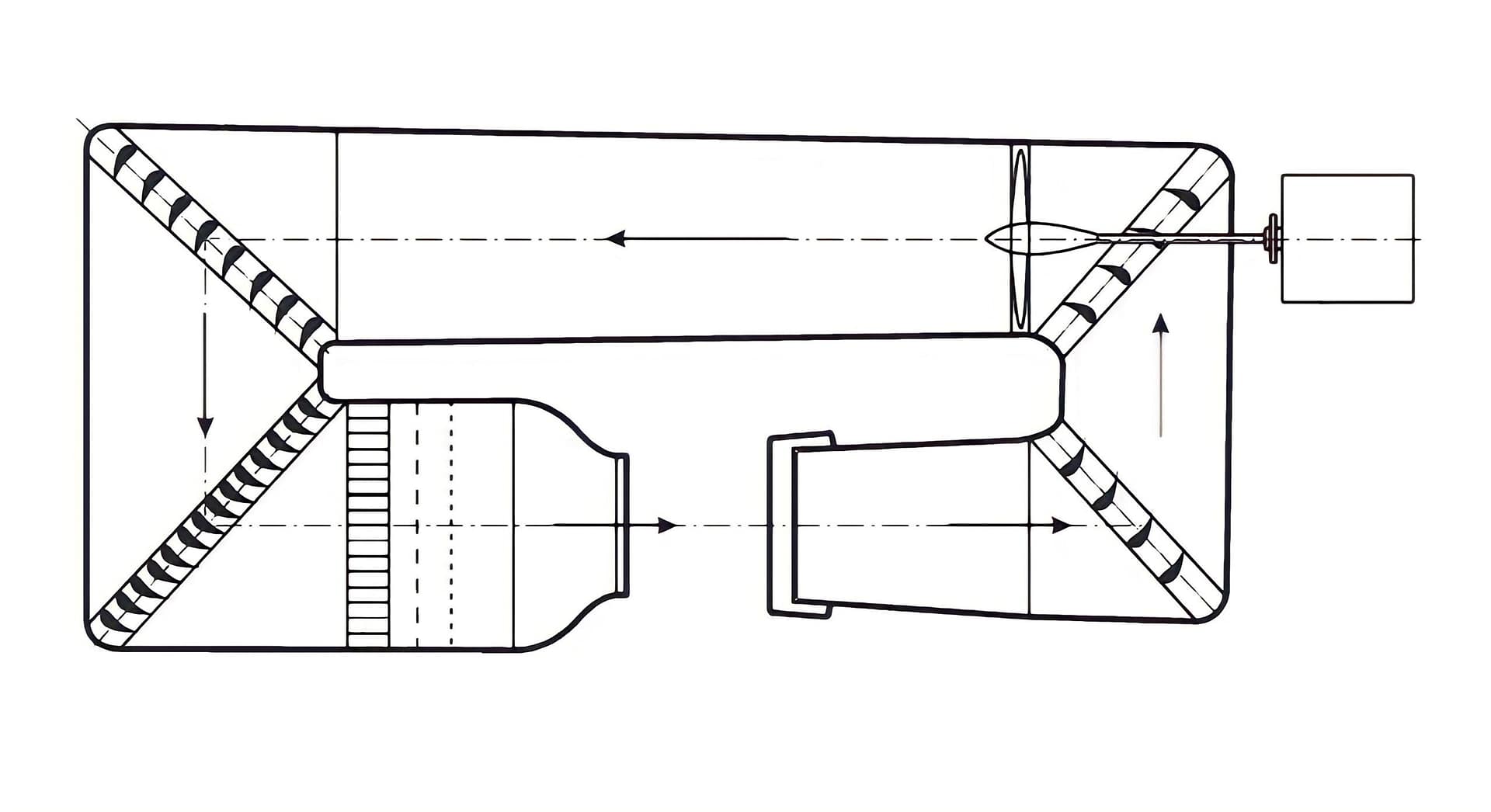
Wind tunnel testing plays a fundamental role in improving our understanding of sounding rocket behavior, providing a controlled environment for systematic analysis and serving as an experimental benchmark for validating predictions obtained through CFD simulations. Our research focuses primarily on analyzing the aerodynamic forces acting on the airbrake system under different flight conditions.
CROSS-DEPARTMENT COLLABORATION
The Aerodynamics Department plays a fundamental role in supporting various aspects of our team’s operations. We work closely with the Structures Department, providing detailed data on the forces and pressures acting on both the rocket body and the airbrake system, ensuring the soundness and accuracy of their designs. We also support the Recovery Department by running CFD simulations, offering insights into parachute performance to improve recovery strategies. We further collaborate with the Mission Analysis Department by providing essential aerodynamic coefficients derived from our analyses, contributing to the precise determination of the rocket’s trajectory.
WANT TO JOIN? THIS IS WHAT WE ARE LOOKING FOR:
REQUIRED SKILLS:
Solid understanding of basic aerodynamic theory.
Proficiency with at least one CAD software (Fusion 360, Solidworks, Solid Edge, …)
Knowledge of the fundamental principles of computational fluid dynamics theory and hands-on experience with CFD software.
A proactive approach to problem-solving to tackle challenges effectively.
ADVANCED SKILLS:
Familiarity with compressible fluid theory.
Basic knowledge of the MATLAB programming language.
Understanding of the fundamental aspects of wind tunnel testing, supported by hands-on experience.